A battery collects the electricity your home cannot use during the day and returns it in the evening. Whether it pays off depends on three things: how much power the grid operator lets you export, how your electricity is accounted for, and whether you need power when the grid goes down.
Why part of the electricity “leaves” without a battery
A solar system produces most at midday, while a home uses most in the morning and evening. According to ESO, the Lithuanian grid operator, a household using 5,000 kWh a year with a 10 kW system can directly use up to 35% of the electricity produced during the day. The rest goes to the grid or, if the grid will not take it, is lost.
When a battery is worth it
- The grid operator limits export. If the permitted export power is 1 kW, most of the surplus is lost without a battery. More: what to do when ESO allows only 1 kW of export.
- You are on net billing. Electricity exported to the grid is then valued in money at the price agreed with your supplier, and in the evening you buy at a different price. The more you use yourself, the less you depend on that difference.
- You need power when the grid goes down. A hybrid inverter with a battery can power a backup circuit: the fridge, the boiler, the lights.
- You intend to use funding. In Lithuania, APVA has a separate measure for systems with a battery: APVA funding for solar systems.
When you can do without one
- You are on net metering: the surplus is “stored” in the grid in kilowatt-hours and taken back later for a storage fee.
- The grid operator lets you export the full power of the system.
- Backup power does not matter to you.
In that case the grid does the battery’s job. Bear in mind that storage tariffs change, so check the current ones on your supplier’s and ESO’s websites before deciding.
If in doubt
Buy a hybrid inverter and add the battery later. That way you will not have to replace the inverter when the accounting rules or your needs change. How the inverters differ: hybrid or grid-tied.
What capacity you need
A battery should hold what you use from sunset to morning, not the whole day’s production. A few reference points:
- According to ESO, the average capacity of batteries declared by private and business customers is 16.6 kWh.
- APVA funding for a system with a battery requires a battery of at least 10 kWh.
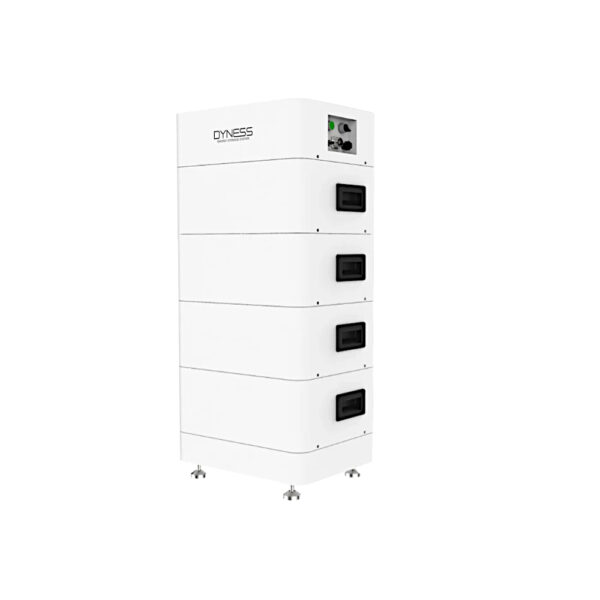
- If your needs grow, capacity can be increased: up to 6 Energy-CORE towers can be connected in parallel.
Batteries in our warehouse
All of them are LiFePO4. For the Energy-CORE 12.8 and the Deye SE-F16-C the manufacturers state a service life of at least 6,000 cycles and a 10-year warranty; the details for the other capacities are on the product pages.
Important: compatibility
The battery must match the inverter. Energy-CORE batteries are high-voltage and suit Solis S6-EH3P…-H series hybrid inverters. The Deye SE-F16-C is low-voltage (51.2 V) and is made for Deye inverters. Please check the combination by phone before buying: +370 690 88999.
Information checked on 14 November 2026. Accounting rules and tariffs may change. Prices include VAT and may change.
- Direct consumption and average battery capacity: ESO renewable energy review 2024 (in Lithuanian).
- Accounting methods: Ignitis – prosumers (in Lithuanian).