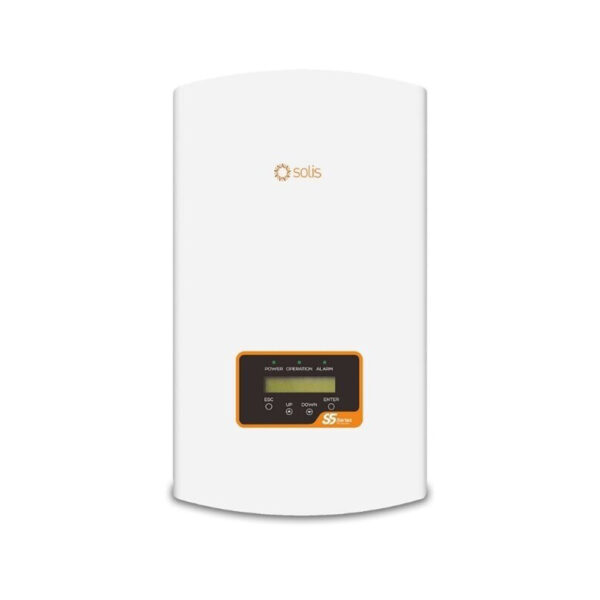
An inverter turns the direct current from solar panels into the alternating current your home uses. Its type decides whether you can connect a battery and whether you have power when the grid goes down.
How they differ
| Grid-tied | Hybrid | |
|---|---|---|
| What it does | Supplies the home with energy from the panels and exports the surplus to the grid. | The same, and it also charges and discharges a battery. |
| Battery | Cannot be connected directly. | Can be connected straight away or later. |
| When the grid goes down | Switches off; the home has no power. | With a battery it can power a backup circuit. |
| When the grid operator limits export | The surplus is lost. | The surplus goes into the battery. |
| Price | Lower. | Higher. |
What the difference costs
Let us compare two three-phase 10 kW inverters from the same manufacturer, both from our warehouse:
The difference is €997.50. That is the price of being able to connect a battery and have backup power. The battery itself is bought separately.
When to choose grid-tied
- Your grid connection terms let you export the full power of the system.
- You are not planning a battery now or in the next few years.
- The lowest upfront price matters most.
When to choose hybrid
- The grid operator (ESO in Lithuania) lets you export only part of the power, for example 1 kW. More on this: what to do when ESO allows only 1 kW of export.
- You want a battery now, or want to keep the option of adding one later without replacing the inverter.
- Having power when the grid goes down matters to you. According to the manufacturer, the Solis S6-EH3P10K-H-EU switches to backup power in under 10 ms.
- You intend to apply for APVA funding for a system with a battery.
Important: battery voltage
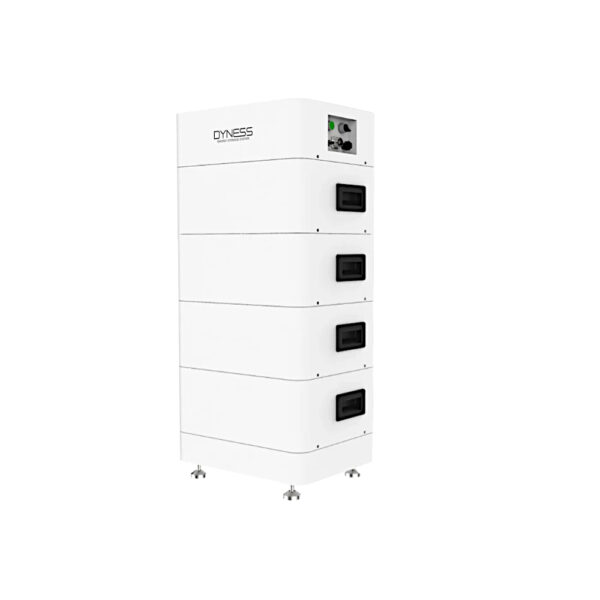
Solis S6-EH3P…-H series hybrid inverters are designed for high-voltage batteries. From our range, Energy-CORE batteries suit them. The Deye SE-F16-C is a low-voltage (51.2 V) battery and is not suitable for these inverters. Please check the combination by phone before buying: +370 690 88999.
If you are still unsure
If you do not need a battery today but may need one in a few years, a hybrid inverter usually pays off: replacing a grid-tied inverter with a hybrid later would cost more than the difference now. If there will definitely be no battery, there is no point in paying extra.
Information checked on 12 November 2026. Prices include VAT and may change; the current price is always on the product page.
- Technical data: Solis S6-EH3P(3-10)K-H, manufacturer’s page.